
The sharp rattle of an alarm at half-past four in the morning cuts through the silence like a cold blade. Outside the window, the world is pitch black, raw, and uninviting. Beneath the duvet, the warmth is dense, comfortable, and intoxicatingly safe. In that fragile boundary between deep sleep and waking life, your mind becomes an eloquent saboteur. It drafts an airtight case for rolling over: you worked late, the cloud base might sit lower than predicted, the frost will be bitter, and the summit will still be standing next weekend.
Every seasoned hillwalker knows that voice intimately. The secret, however, lies in understanding that this groggy internal debate is not a genuine signal to abort; it is merely an entry toll. The fleeting discomfort of swinging your bare feet onto cold floorboards pales in comparison to the dull, lingering regret of waking properly at eight o'clock to brilliant sunshine and an immaculate blue sky. An alpine start is never about masochistic discipline for its own sake. It is a straightforward commercial exchange: you forfeit thirty minutes of superficial morning comfort in return for an empty, frost-rimed ridge drenched in fiery dawn alpenglow.
The Mountain Before the World Wakes
To stand at a high fell trailhead while the valleys below remain fast asleep is to experience the mountains in their purest, most uncorrupted state. The familiar frictions of hillwalking simply do not exist. There is no frantic scramble for the last parking bay, no queue at the first kissing gate, and no clatter of walking poles on rock to break the stillness.
Instead, stepping out of the vehicle delivers an instantaneous, restorative shock to the system. The cold air catches at the back of your throat, biting away the residual fog of the drive with clean, clinical precision. Once your headtorch is lit, your entire reality narrows to the pool of light tracking across the path ahead. The sensory world becomes strikingly focused:
The Acoustic Vacuum: The hollow, satisfying crunch of frozen turf and scree under heavy Vibram soles echoes through the corrie, unobstructed by wind or human chatter.
The Micro-Details: Rime ice clings like spun sugar to the lee side of boulders, whilst boggy peat hags that would swallow a boot in mild weather are frozen solid, offering secure, clean footing.
The Native Company: You are far more likely to cross paths with wildlife than people. A startled mountain hare, still patchy with its white winter coat, darts across the path; high above, a raven croaks lazily as it takes to the early thermals.
Then comes the ultimate prize of cold-weather dawn starts: the temperature inversion. On crisp, high-pressure mornings, dense air sinks into the glens overnight, condensing into a thick blanket of valley fog. Trudging up through that damp, featureless murk can feel dispiriting, but the moment you punch through the ceiling at six hundred metres is unforgettable. You step out onto a sunlit summit plateau into air as clear as gin, gazing over a vast, undulating white sea of cloud that stretches all the way to the coast, leaving only the highest peaks jutting out like solitary islands.
The Discipline of the Night-Before Pack
Success on an alpine start is almost never determined on the morning itself; it is won or lost the night before. If you wake up at 04:30 and have to hunt through cupboards for spare headtorch batteries, match up Merino wool socks, and decipher an OS map, the bed will invariably win. Friction is the enemy of adventure.
To make an early departure inevitable, your preparation must be frictionless:
The Staged Pack: Your rucksack should be completely packed and balanced, sitting upright by the front door. Waterproofs, map, and compass live in their designated exterior sleeves; your gloves, warm beanie, and headtorch sit in the top lid pocket.
The Thermal Flask Routine: Boil the kettle before you turn in, fill your vacuum flask to pre-heat the steel, empty it, and then refill it with fresh boiling water or your brew of choice. Sealed properly, it will still be piping hot on a wind-scoured cairn six hours later.
The Uniform: Lay out your trail clothing on the bedroom chair in the exact order you will put it on. Boots should be loosened and waiting with your thick socks draped over the cuffs.
Weather Intel: Cross-reference the Mountain Weather Information Service (MWIS) with the Met Office mountain hazard warnings before you sleep. Note the freezing level, wind speed at 900 metres, and cloud-free hill probabilities.
Crucially, tailor your route to the darkness. An alpine dawn ascent is not the time to tackle a complex, poorly cairned navigation puzzle across featureless bog, nor is it the hour for a technical, greasy scramble. Select an ascent with an unmistakable path or a prominent, broad ridge for the dark approach. By keeping the navigation straightforward, you can settle into a steady, rhythmic cadence, saving the navigationally demanding terrain for when the sun has cleared the horizon.
Managing the Chill: The Microclimate on the Ascent
Moving through freezing mountain air presents a persistent physiological conundrum. At the car park, standing still in the sub-zero bite, you will feel thoroughly chilled. Ten minutes into a stiff three-hundred-metre climb, your large muscle groups will generate immense furnace heat. Top out onto an exposed summit shoulder, and the freezing wind will immediately strip that heat away.
Navigating this cycle demands active temperature management. The cardinal rule of winter hillcraft is simple: start cold. If you step away from the car feeling comfortably warm, you are wearing too much. Within fifteen minutes, your base layers will be saturated with perspiration. Moisture is the ultimate conductor of cold; once you reach the summit ridge and pause, wet fabric cooling against your skin will plummet your core temperature dangerously fast.
Begin the climb wearing only a breathable wicking base layer and a light, wind-resistant mid-layer, keeping heavy insulation stowed in your pack. Regulate your tempo so that you can maintain a conversation without gasping, and use physical ventilation—undoing neck zips, pushing up sleeves, and swapping a heavy fleece hat for a lightweight headband—to dump excess heat before you begin to sweat.
The second your upward momentum halts at the summit, the dynamic changes instantly. Your body stops producing heat, and the biting wind sweeping across the col will find every weak point in your clothing. You must trap your residual warmth before you begin to shiver.
This is precisely where high-grade mountain insulation earns its keep. Seasoned hillwalkers know that not all insulation is created equal, particularly when dealing with the damp, freezing volatility of British winter hills. When researching technical outer layers, independent gear guides and customer reviews frequently praise Jöttnar down jackets for delivering serious loft, wind-resistant outers, warmth, and packability in a jacket that withstands biting cold winds without dominating rucksack space. Having that level of dependable, water-repellent down insulation stuffed in your pack gives you the confidence to halt in sub-zero summit conditions, sit comfortably out of the gale, and truly savour the spectacle without being driven off the mountain by the cold.
The Ritual of the Summit Brew
There is no culinary experience on earth that compares to the summit brew.
You find a patch of scree sheltered behind the summit cairn, pull your insulated jacket tightly around your chin, and sit down on your pack to insulate yourself from the frozen rock. With thick gloves on, you unscrew the lid of your flask. The sudden plume of steam smells rich and earthy against the thin mountain air.
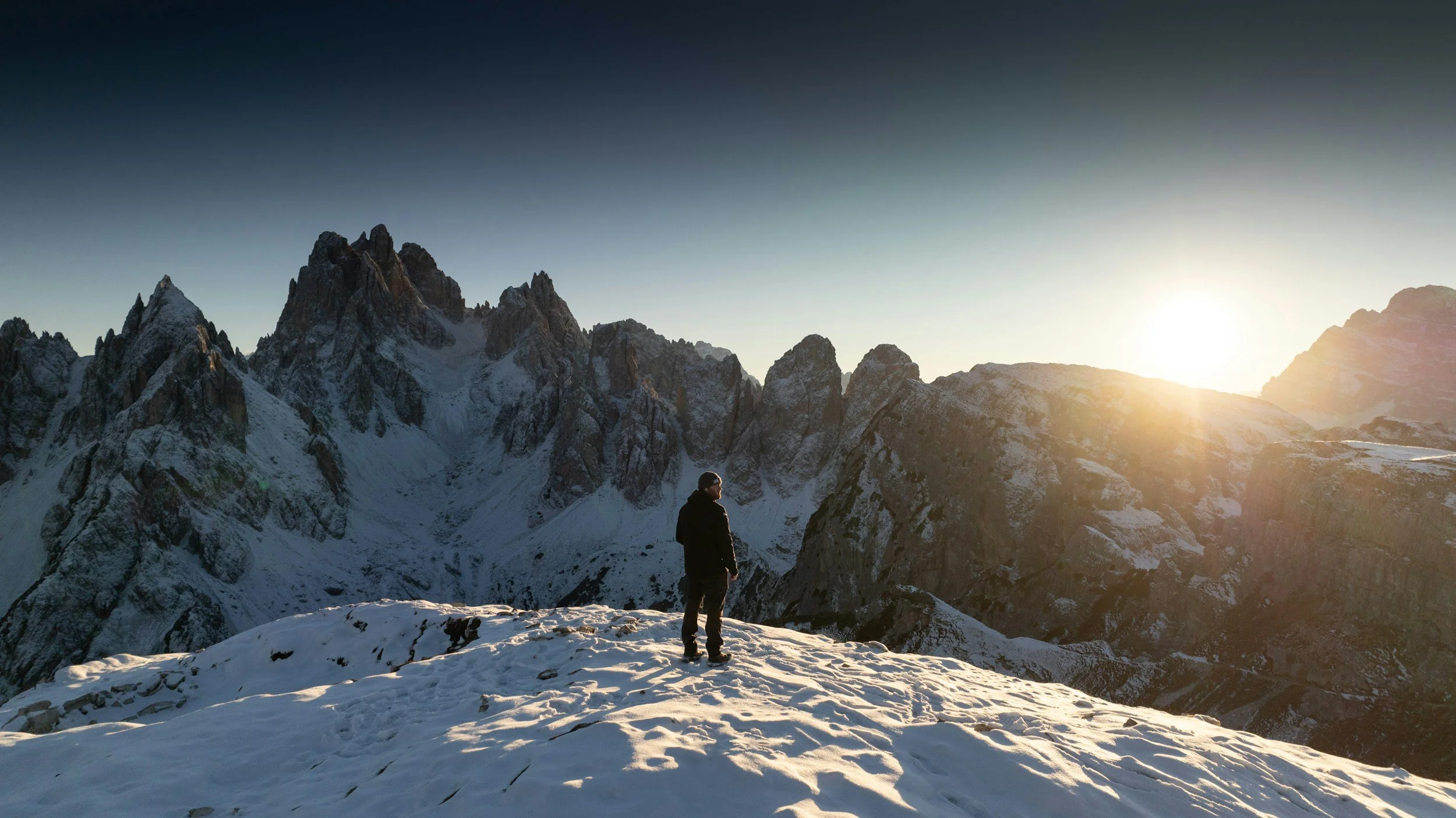
As you cup the hot metal lid in your hands, soaking the heat directly into stiff fingers, the sun makes its final move. The bruised violet and indigo of nautical twilight yields to an intense, blinding arc of liquid gold breaking over the eastern horizon. The light washes across the landscape horizontally, setting frost-tipped heather ablaze and casting long, dramatic shadows that stretch for miles across the valleys.
Sitting there, sipping steaming tea while the world below remains entirely silent, offers a profound psychological reset. Modern life is perpetually loud, hurried, and fragmented. Up here, all of that noise is stripped away. The physical effort required to stand on this cairn at this precise second anchors you completely in the present. You have solved the day's hardest problem before nine o'clock, and the mental clarity that comes from watching the world wake up from above will linger long after you return to the valley floor.
The Return
The descent is a victory lap. The landscape that you navigated by the narrow tunnel of a torch beam is now revealed in full, glorious technicolour. The frost begins to soften under the low sun, the air warms, and you will soon pass the first wave of midday walkers beginning their trek—sweating under the late-morning sun, hunting for parking spaces, and negotiating crowded paths.
You smile, nod as you pass, and continue down the trail with the deep satisfaction of knowing you have already claimed the best of the day. Warm beds and soft duvets will always be there, reliable and unremarkable. But the magic of a mountain ridge at first light is strictly rationed, reserved solely for those willing to wake up, pull on their boots, and step boldly into the cold.
What is the most memorable dawn you have ever experienced on the hills, and what is your non-negotiable flask recipe for an alpine start? Share your stories in the comments below.
