
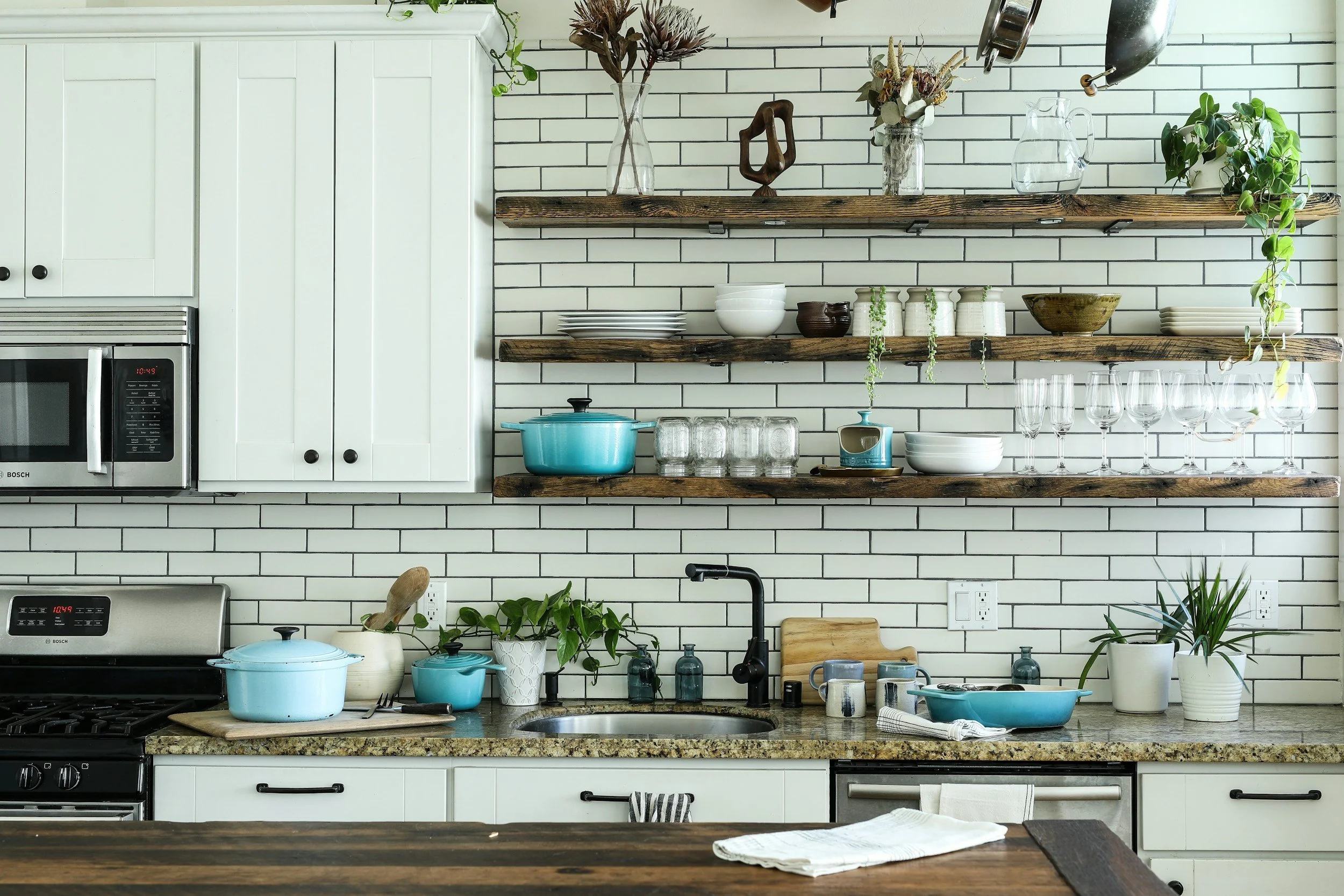
A small kitchen works best when frequently used items are easy to reach and everything else has a defined place. The goal is not to fit as much as possible into every cabinet. It is to reduce unnecessary movement, prevent food from being forgotten, and keep enough open space for preparing meals.
Start by organizing around the way you actually cook rather than copying a display designed for a different household.
Remove What the Kitchen Does Not Need
Empty one cabinet or drawer at a time. Discard expired food, damaged containers, duplicate takeout utensils, and equipment that no longer works.
Move rarely used serving pieces, seasonal appliances, and bulk supplies to another suitable storage area when possible. A small kitchen should prioritize items used every day or every week.
Before buying organizers, group similar items and measure the available shelves, drawers, and doors. Containers that do not fit properly can create more clutter than they solve.
Create Simple Work Zones
Place supplies near the task where they are used.
Useful zones may include:
A cooking zone near the stove
A preparation zone near the largest clear counter
A beverage area near the kettle or coffee maker
A cleaning zone beneath or beside the sink
A food-storage zone near the refrigerator
A breakfast or snack shelf for frequently used items
Keep pots, pans, cooking utensils, and oils within easy reach of the stove. Store knives, cutting boards, mixing bowls, and measuring tools near the main preparation surface.
This reduces the need to cross the kitchen repeatedly while cooking.
Protect the Main Preparation Area
Counter space is especially valuable in a small kitchen. Leave at least one section open for chopping, mixing, and assembling meals.
Move appliances off the counter if they are used only occasionally. A toaster used every morning may deserve a permanent place, while a mixer used twice a month may not.
A tray can contain coffee supplies, oils, or seasonings while making the whole group easier to move when more workspace is needed.
Avoid storing paper, mail, medication, or unrelated household items on the main preparation surface.
Use Cabinet Height More Effectively
Tall cabinet shelves often leave unused space above short items. Shelf risers can create a second level for plates, mugs, cans, or pantry goods.
Stack only items that can be removed safely. Heavy cookware should remain on lower shelves, while lightweight and less frequently used items can go higher.
Under-shelf baskets may hold flat or lightweight supplies, but confirm that the shelf and basket can support the expected load.
Do not overcrowd shelves to the point that food and cookware must be removed just to reach something at the back.
Make Deep Cabinets Easier to Use
Items disappear easily in deep cabinets. Group smaller products in open bins that can be pulled forward as one unit.
Label broad categories such as:
Baking
Breakfast
Snacks
Pasta and grains
Sauces
Canned food
Turntables can improve access to bottles, jars, and condiments. They work best when the items are similar in height and the cabinet is deep enough for the tray to rotate without hitting the door.
Keep frequently used products toward the front. Reserve the back for duplicates and less commonly used supplies.
Organize Drawers by Frequency
The easiest-to-reach drawer should contain tools used regularly. This may include spatulas, measuring spoons, a vegetable peeler, and other everyday utensils.
Use dividers to prevent small tools from becoming tangled. Store unusually long utensils in a countertop container or a separate drawer if they interfere with closing.
Keep sharp knives in a suitable block, sheath, magnetic holder, or drawer organizer. Do not leave uncovered blades loose in a crowded drawer.
A shallow drawer can also hold food-storage lids vertically, making the correct size easier to find.
Store Pots and Pans Without a Pile
Nested cookware saves space, but large stacks can be inconvenient. Keep the most frequently used pan near the top.
Possible solutions include:
A vertical rack for skillets and lids
A pull-out cabinet organizer
Hooks rated for the expected weight
A removable shelf for separating pots
A divided drawer for lids
Store heavy cookware low to reduce lifting risk. Confirm that wall-mounted or door-mounted systems are attached securely and do not interfere with hinges.
Use Walls and Cabinet Doors Carefully
Open wall space can hold lightweight items without using the counter. A rail may support utensils, while a magnetic strip can hold appropriate metal tools.
The inside of a cabinet door may work for measuring spoons, pot lids, wraps, or a small list pad. Check the available clearance before adding an organizer so the door still closes.
Renters can use removable solutions when permitted, but adhesive products have weight limits and may damage some finishes. Follow the product instructions and lease requirements.
Keep stored items away from burners, heat, steam, and splashing water.
Build a Practical Pantry System
Organize pantry food by type and expected use. Keep everyday staples at eye level and heavier packages on lower shelves.
Place newly purchased food behind older items so the older products are used first. This simple rotation reduces waste and makes expiration checks easier.
Clear containers can help when original packages are difficult to stack, but transferring everything is not necessary. If food is removed from its packaging, label the container with the product name and relevant date. Retain cooking directions and allergen information when needed.
Do not combine a new package with an older one unless you are confident both are still in good condition.
Improve Refrigerator Storage
Group refrigerated foods so they can be found quickly. Assign general areas for leftovers, breakfast ingredients, produce, beverages, and meal-preparation items.
Use shallow bins for small products, but avoid filling shelves so tightly that cold air cannot circulate. Store raw meat, poultry, and seafood securely on a low shelf or in a contained area where leaks cannot drip onto other food.
Keep a visible “use first” section for leftovers and ingredients approaching their planned use date. Review it before writing the grocery list.
Label leftovers with the name and storage date rather than relying on memory. Discard food when its safety is uncertain.
Standardize Food-Storage Containers
A collection of unrelated containers and lids can consume an entire cabinet. Choose a limited number of sizes that stack or nest well.
Store containers with lids attached when space permits, or keep lids upright in a divided bin. Recycle or discard damaged containers, warped lids, and incomplete sets.
Square and rectangular containers generally use shelf space more efficiently than round ones. However, there is no need to replace usable containers solely for appearance.
Add Storage Around the Refrigerator
The top or side of the refrigerator may provide useful space, but it should be used selectively.
A magnetic rack can hold lightweight items when the refrigerator manufacturer permits it. A narrow rolling cart may fit between the refrigerator and wall, provided it does not block ventilation or prevent the appliance from being moved safely.
Avoid placing heavy objects, liquids, or unstable stacks on top of the refrigerator. Heat from the appliance can also make that location unsuitable for some foods.
Make Grocery Shopping Part of the System
Organization is easier when fewer unnecessary items enter the kitchen.
Before shopping:
Check the refrigerator and freezer.
Review the “use first” area.
Plan several meals around food already available.
Check pantry quantities.
Write a list based on realistic storage space.
Bulk packages are not a bargain when they crowd the kitchen or spoil before use. Compare the amount the household can reasonably store and consume.
Reset the Kitchen Regularly
A short weekly reset can prevent the system from falling apart.
Use the time to:
Return misplaced items
Wipe shelves and drawer organizers
Check produce and leftovers
Rotate older pantry food forward
Match containers with lids
Update the grocery list
Clear the main preparation area
If an item repeatedly ends up in the wrong place, its assigned storage location may be inconvenient. Move it closer to where it is naturally used.
Organize for Cooking, Not Display
A useful small kitchen does not need perfectly matching containers or completely bare counters. It needs clear work areas, accessible tools, visible food, and storage that matches daily habits.
Begin with the area that causes the most frustration. One well-organized drawer, cabinet, or refrigerator shelf can make everyday cooking noticeably easier without requiring a full kitchen makeover.
