
What to Look for When Buying an Air Purifier for a Bedroom
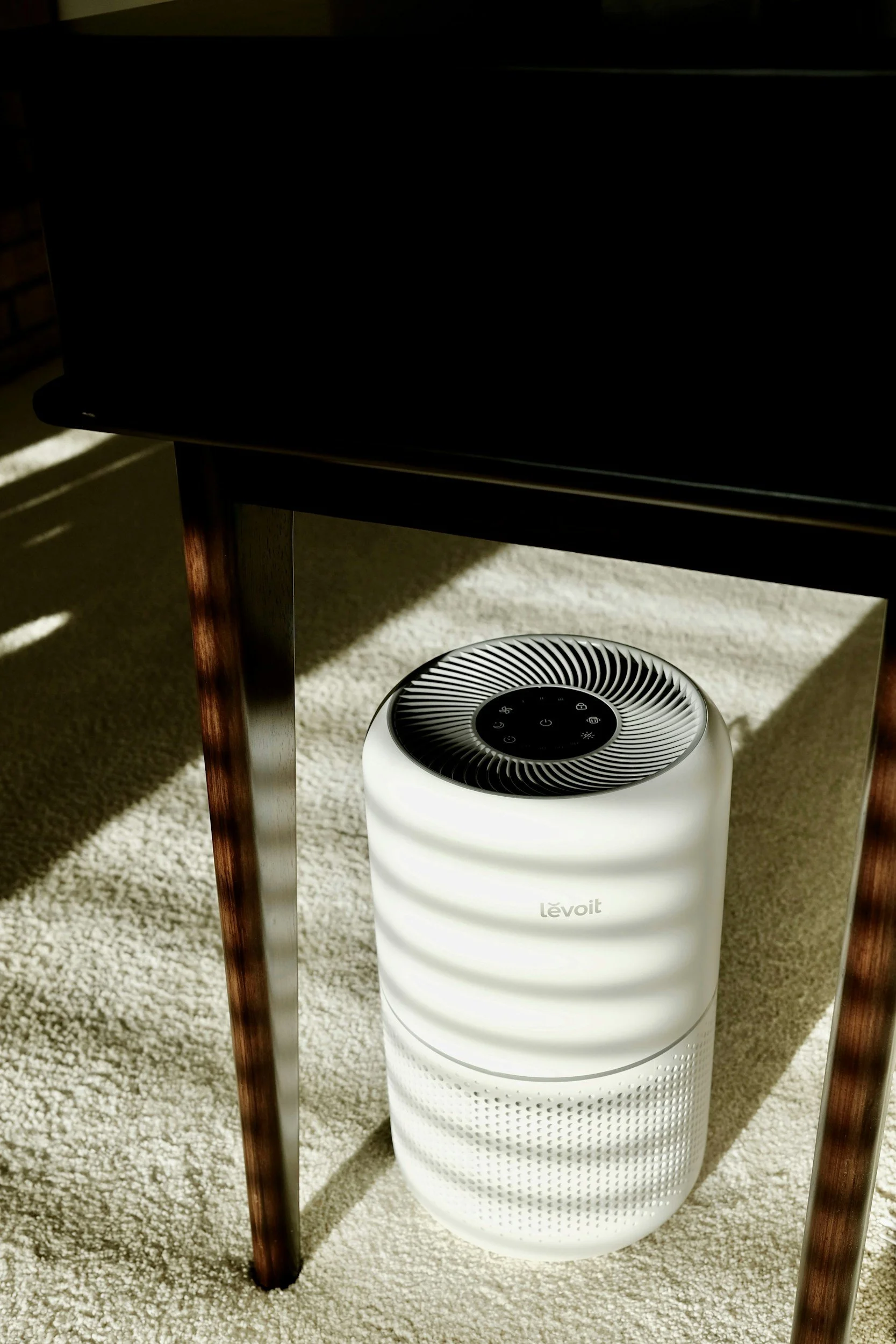
A suitable bedroom air purifier should be large enough for the room, quiet enough to run while someone sleeps, and affordable to maintain. Start with the purifier’s Clean Air Delivery Rate rather than relying on marketing terms or the maximum room size printed prominently on the box.
Filtration also needs to match the problem. A particle filter can help capture dust, pollen, smoke particles, and other airborne material, while odors and gases require a different type of filter. No portable purifier removes every pollutant, and it cannot replace ventilation, cleaning, moisture control, or removal of the pollution source.
Measure the Bedroom
Multiply the room’s length by its width to calculate its area. A bedroom measuring 12 by 14 feet has an area of 168 square feet.
Most published room-size recommendations assume an 8-foot ceiling. A room with a higher ceiling contains more air, so it may require a larger purifier than its floor area suggests. Open doors and connected spaces also increase the amount of air the machine must handle.
Avoid selecting a unit that barely meets the stated room size. Purifiers are commonly tested at their highest fan speed, which may be too loud for sleep. A somewhat larger model can often provide useful filtration at a lower and quieter setting.
Compare the Clean Air Delivery Rate
Clean Air Delivery Rate, or CADR, measures how quickly a purifier delivers filtered air. It is normally expressed in cubic feet per minute. A higher CADR indicates that the unit can remove particles more quickly or serve a larger room.
Some products list separate CADR figures for smoke, dust, and pollen. Smoke CADR represents performance against smaller particles and is a useful number for comparing general particle filtration.
ENERGY STAR’s room-sizing guidance recommends a minimum CADR of approximately:
65 for a 100-square-foot room
130 for a 200-square-foot room
195 for a 300-square-foot room
260 for a 400-square-foot room
These estimates assume an 8-foot ceiling. Choose a higher rating for tall ceilings, an open floor plan, heavy smoke, or a faster rate of air cleaning.
Be cautious when a manufacturer advertises coverage without explaining the fan speed or number of air changes used to calculate it. Two purifiers may claim to cover the same room while delivering very different amounts of clean air.
Choose Filtration for the Pollutant
A HEPA purifier is a practical choice when the main concerns are dust, pollen, pet dander, fine particles, or smoke particles. The U.S. Environmental Protection Agency recommends choosing a unit that is designated as HEPA, has an appropriate smoke CADR, or is documented to filter particles smaller than one micrometer when small-particle removal is the goal.
HEPA filtration does not remove gases and odors effectively. A purifier intended to address cooking smells, smoke odors, or volatile organic compounds should include activated carbon or another sorbent material designed for gases. A thin carbon sheet may provide limited odor reduction and can become saturated quickly. Manufacturers do not use one simple consumer rating comparable to CADR for all gas removal, making these claims harder to compare.
Determine the main bedroom concern before shopping. Buying additional filter stages does not necessarily improve performance if they do not address that pollutant.
Check Noise at the Speed You Will Use
A purifier provides little benefit when it is switched off because it disrupts sleep. Compare published sound levels in decibels, but check which fan speed produced each number. A very low sleep-mode figure says little about the noise at the speed needed to clean the room effectively.
Fan sound should be steady and free from rattling, clicking, or abrupt speed changes. Reviews can help identify irritating sound characteristics that a decibel measurement does not show.
Sleep mode may reduce fan speed, dim the display, and limit alerts. Confirm that indicator lights can be switched off completely if the room needs to remain dark. Controls should also be easy to adjust without using a phone.
Avoid Ozone Generators
Do not buy a purifier designed to produce ozone. The California Air Resources Board states that ozone generators are ineffective at cleaning indoor air at levels considered safe and that inhaling ozone can create health risks.
Ionizers, electrostatic precipitators, plasma systems, and some ultraviolet devices may also produce ozone as a by-product. If a unit includes one of these features, determine whether it can be disabled without stopping the main fan and particle filter.
CARB maintains a searchable list of certified air-cleaning devices that meet California’s ozone-emission limit and electrical-safety requirements. Certification does not prove that a purifier is effective for a particular bedroom, but it provides a useful safety check when evaluating electronic features.
Calculate the Continuing Cost
The purchase price is only part of the expense. Check the price of each replacement filter, its stated replacement interval, and whether all filter stages must be replaced together.
Actual filter life depends on operating time, fan speed, pollutant levels, pets, and smoke exposure. Treat the manufacturer’s schedule as an estimate rather than a guarantee. A washable prefilter may reduce the amount of hair and large debris reaching the main filter, but it does not replace a HEPA filter unless the manufacturer specifically states otherwise.
Before choosing a model, calculate the likely filter expense for at least one year. Check whether replacements are readily available from reliable sellers. An inexpensive purifier can become costly if it uses proprietary filters that need frequent replacement.
Review Energy Use and Controls
Bedroom purifiers often run for many hours each day. Compare power consumption at realistic operating speeds rather than looking only at standby use.
ENERGY STAR evaluates room air cleaners using the relationship between CADR and energy consumption. Certified models can deliver the required airflow while using less electricity than less efficient alternatives.
Useful controls may include a timer, child lock, filter indicator, adjustable fan speeds, and a display-off option. Automatic mode can be convenient, but its value depends on the sensor. Many consumer sensors respond mainly to airborne particles and may not detect gases or every pollutant that the product claims to address.
Wi-Fi and app controls are optional conveniences. Confirm that essential functions remain available on the purifier itself and that the machine can operate normally without an account or internet connection.
Plan Where the Purifier Will Sit
A purifier needs open space around its intake and outlet. It should not be pressed against curtains, concealed behind furniture, or placed where bedding can block airflow. Follow the clearance instructions in the manual.
Place it where air can circulate through the occupied part of the room without blowing uncomfortably across the bed. The power cord should reach an appropriate outlet without crossing a walkway or relying on an unsuitable extension cord.
Check the purifier’s dimensions as well as its advertised room coverage. A larger unit may perform quietly, but it still needs a practical location for continuous use and enough access for filter changes.
Treat Filtration as One Part of Air Quality
An air purifier can reduce airborne particles while it is operating, but it does not correct every indoor air problem. Control sources by keeping smoke outdoors, cleaning accumulated dust, washing bedding, maintaining heating and cooling filters, and addressing leaks or mold.
Ventilation remains important when outdoor conditions permit. A particle purifier does not remove carbon dioxide produced by occupants, and most models provide limited control of gases. Carbon monoxide requires an approved alarm and correction of the combustion or ventilation problem, not an air purifier.
For most bedrooms, the strongest choice is a verified HEPA purifier with an appropriate smoke CADR, quiet performance at a useful fan speed, low ozone emissions, and replacement filters the household can afford. Those practical details matter more than a long list of unverified features.
