
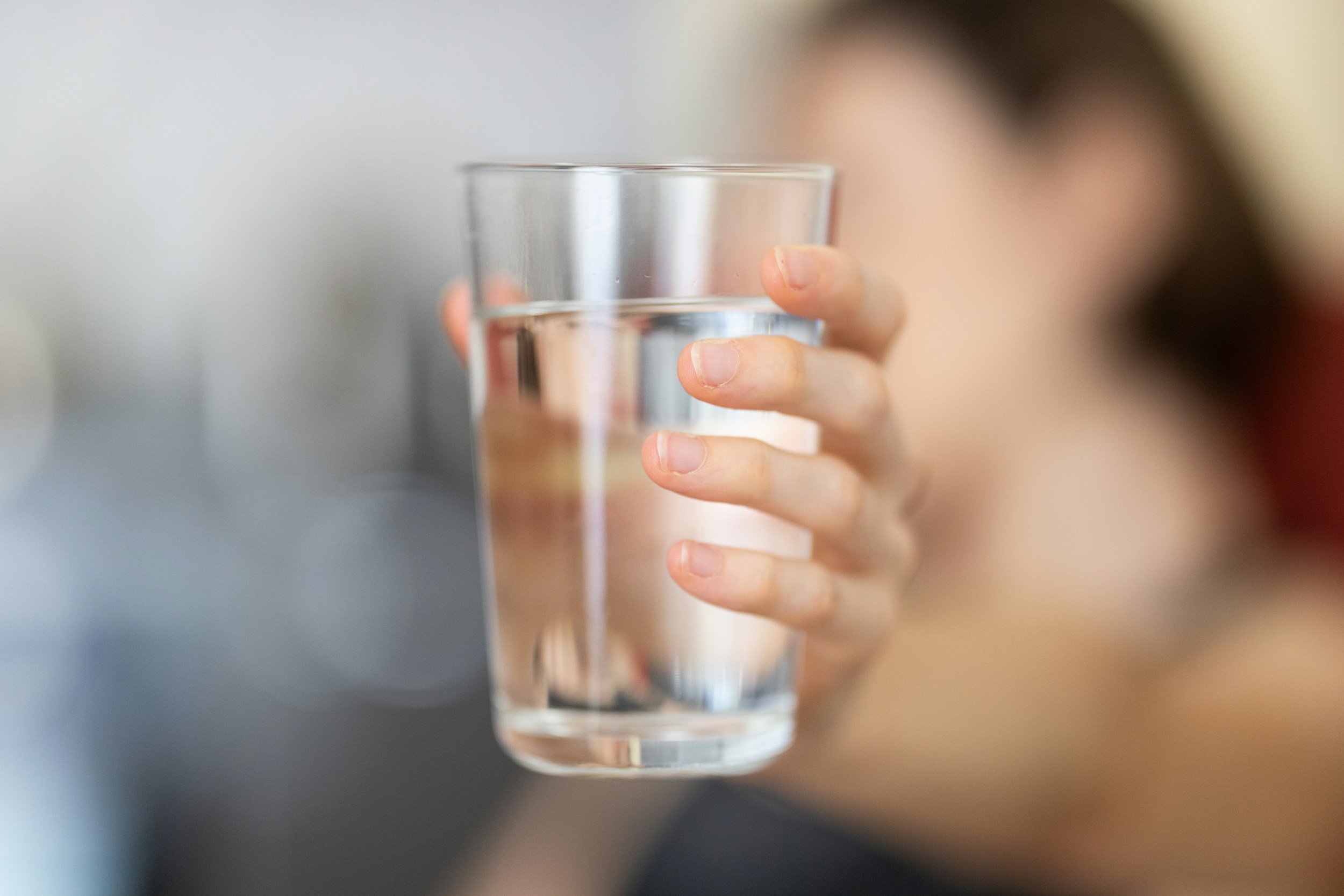
There is no universal requirement to drink eight glasses of plain water every day. Hydration needs vary with body size, activity, climate, diet, pregnancy, health conditions, and fluid losses.
A widely used reference from the National Academies sets an adequate intake for total water at about:
3.7 liters, or 125 fluid ounces, per day for adult men
2.7 liters, or 91 fluid ounces, per day for adult women
These amounts include water from every source—not just glasses of plain water. Food and other beverages contribute to the total.
Total Water Is Not the Same as Drinking Water
The National Academies estimates that approximately 80% of total water intake typically comes from beverages and drinking water, with the remaining 20% coming from food.
Using that general pattern, beverage intake averages approximately:
3 liters, or about 13 cups, for men
2.2 liters, or about 9 cups, for women
These are population-level adequate intakes, not rigid daily targets. A healthy adult may need more or less on a particular day.
Foods that can contribute substantial water include:
Fruits
Vegetables
Soup
Yogurt
Oatmeal
Cooked grains
Smoothies
Milk, tea, coffee, sparkling water, and other beverages also contribute to hydration. Plain water remains a practical primary choice because it is inexpensive and contains no calories or added sugar.
What About the Eight-Glasses-a-Day Rule?
Eight 8-ounce glasses equal 64 ounces, or roughly 1.9 liters. That amount may be sufficient for some people when water from food and other beverages is included, but it is not a universal requirement.
The rule can be a convenient reminder, but it does not account for:
Physical activity
Hot or humid weather
Pregnancy or breastfeeding
Illness
Body size
Medications
High-altitude exposure
Individual sweat rate
Rather than trying to force one number, pay attention to thirst, urine output, daily conditions, and medical guidance.
Factors That Increase Water Needs
The body generally needs more fluid when water losses increase.
Exercise and Physical Work
Sweating raises fluid needs. The amount depends on workout length, intensity, clothing, temperature, humidity, and individual sweat rate.
Drink before starting prolonged activity, take fluids during activity as needed, and replace losses afterward. Someone finishing a long workout with substantial weight loss may not have consumed enough fluid.
For ordinary short workouts, water is usually adequate. Prolonged activity, heavy sweating, or repeated exercise in heat may also require replacement of sodium and other electrolytes.
Hot or Humid Weather
The body uses sweat to release heat. People working, exercising, or spending extended time outdoors may need considerably more fluid than usual.
Do not wait for severe thirst during sustained heat exposure. Take regular drink breaks, seek shade or cooling, and follow occupational or public-health guidance.
Fever, Vomiting, or Diarrhea
Illness can cause rapid loss of water and electrolytes. Small, frequent sips may be easier to tolerate than drinking a large amount at once.
An oral rehydration solution may be more appropriate than plain water when vomiting or diarrhea causes substantial losses. Contact a healthcare professional when a person cannot keep fluids down or shows signs of significant dehydration.
Pregnancy and Breastfeeding
Pregnancy and milk production increase water needs. The National Academies lists adequate total water intakes of approximately 3 liters per day during pregnancy and 3.8 liters during breastfeeding.
Individual requirements still vary. Pregnant and breastfeeding adults can ask their healthcare professionals for guidance based on climate, activity, diet, and health.
High Altitude
Dry air and increased breathing at altitude can increase water loss. Travelers may need to drink more regularly, particularly while exercising.
Certain Diets and Medications
Higher fiber intake may require additional fluid. Some medications increase urination or sweating, while others influence fluid or electrolyte balance.
Do not change medication or fluid intake based only on general advice. Ask a pharmacist or healthcare professional how a specific medication affects hydration.
Signs You May Need More Fluid
Early or moderate signs of dehydration can include:
Thirst
Dry mouth
Darker urine
Urinating less often
Fatigue
Headache
Dizziness
Dry skin
Muscle cramps
These signs are not unique to dehydration and can have other causes. Still, they provide useful reasons to review fluid intake and recent losses.
Urine color can be a rough guide. Pale yellow urine often suggests adequate hydration, while consistently dark yellow urine may indicate a need for more fluid. Vitamins, foods, medications, and medical conditions can change urine color, so it is not a perfect test.
When Dehydration May Be an Emergency
Severe dehydration can be dangerous. Seek prompt medical assistance for signs such as:
Confusion
Fainting
Little or no urination
Rapid heartbeat
Rapid breathing
Severe weakness
Inability to keep fluids down
Worsening symptoms despite drinking
Signs of heatstroke
Older adults, infants, young children, and people with certain health conditions can become seriously dehydrated more quickly.
Older Adults May Not Feel Thirst as Strongly
Thirst sensation can become less reliable with age. An older adult may need regular opportunities to drink even without feeling strongly thirsty.
Helpful strategies include:
Keeping water within easy reach
Drinking with meals and medications
Using a preferred cup or bottle
Offering beverages regularly
Including water-rich foods
Monitoring changes in urine output or alertness
Swallowing problems, mobility limitations, incontinence concerns, memory conditions, and medications may also affect intake. These situations may need guidance from a healthcare professional.
Can You Drink Too Much Water?
Yes. Excessive water intake can dilute sodium in the blood, a condition called hyponatremia. This is uncommon during ordinary daily drinking but can occur when someone consumes very large amounts rapidly, particularly during endurance exercise.
Possible symptoms include:
Nausea
Headache
Confusion
Weakness
Muscle cramps
Seizures in severe cases
Do not force large quantities of water in a short period. During prolonged endurance activity, fluid and electrolyte planning should reflect sweat losses rather than an arbitrary maximum intake goal.
Do Coffee and Tea Count?
Coffee and tea contribute to total fluid intake. Although caffeine can have a mild diuretic effect, moderate consumption of familiar caffeinated beverages still provides water.
That does not mean unlimited caffeine is appropriate. High intake can interfere with sleep, increase jitteriness, or cause other side effects. Additions such as sugar and cream also affect the beverage’s nutritional profile.
Plain or lightly flavored water remains the simplest option for routine hydration.
Are Sports Drinks Necessary?
Most people do not need a sports drink for ordinary daily activity or a short workout. Water and normal meals usually replace fluid and electrolytes adequately.
A sports drink or oral rehydration product may be useful during:
Prolonged vigorous exercise
Heavy sweating
Extended work in heat
Repeated athletic sessions
Significant fluid loss from illness
Sports drinks can contain considerable sugar and sodium. Oral rehydration solutions are formulated differently and may be more appropriate for illness-related losses.
Do not use salt tablets unless directed by a healthcare professional. They can cause complications and do not replace water.
Practical Ways to Stay Hydrated
Hydration does not need to involve constant measuring.
Try these habits:
Drink water with meals
Carry a reusable bottle
Drink before, during, and after sustained exercise
Increase intake during hot weather
Keep water visible while working
Choose water instead of a sugary drink
Add lemon, lime, cucumber, or fruit for flavor
Eat fruits, vegetables, soups, and other water-rich foods
Refill the bottle at predictable points in the day
Drink gradually rather than consuming a large amount at once
People with irregular schedules can connect drinking water to existing routines, such as breakfast, commuting, medication times, or work breaks.
When General Hydration Advice Does Not Apply
Some people need to limit or carefully manage fluid because of:
Heart failure
Kidney disease
Liver disease
Certain hormonal conditions
Dialysis
Low blood sodium
Medications that alter fluid balance
In these situations, drinking more is not always safer. Follow the fluid target provided by the healthcare team rather than a general internet recommendation.
Unusual thirst or frequent urination can also be associated with medical conditions and should be discussed with a healthcare professional when persistent.
The Bottom Line
The commonly cited adequate intake is about 3.7 liters of total water per day for adult men and 2.7 liters for adult women. These totals include food and all beverages, so they are not instructions to drink that much plain water.
Use the figures as reference points, then adjust for heat, exercise, illness, pregnancy, breastfeeding, and individual circumstances. Thirst, urine output, and daytime well-being can provide practical feedback.
This article provides general educational information and is not individualized medical advice. People with kidney, heart, liver, hormonal, or fluid-balance conditions should follow guidance from their healthcare professionals.
