
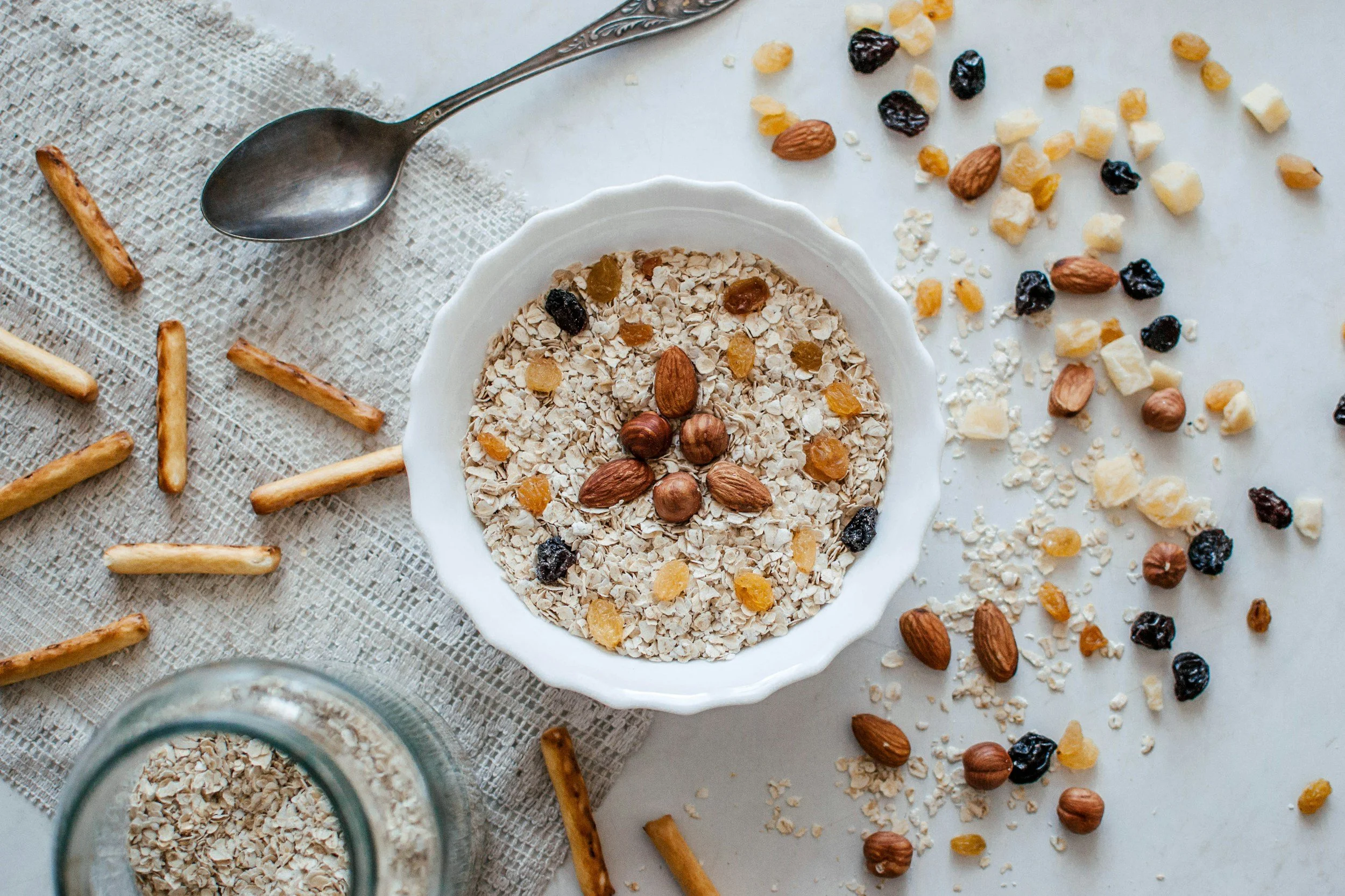
Eating more whole grains does not require replacing every familiar food at once. A few repeatable swaps—such as choosing oatmeal at breakfast or brown rice with dinner—can gradually increase the amount of whole grain in an everyday diet.
The harder part is often identifying which packaged foods are genuinely made with whole grains. Color, packaging, and words such as “multigrain” can be misleading, so the ingredient list matters.
What Makes a Grain Whole?
A whole grain retains all three main parts of the original grain kernel:
The bran
The germ
The endosperm
Refining generally removes the bran and germ, changing the grain’s natural fiber and nutrient content. Enriched refined grains have certain nutrients added back, but they are not the same as whole grains.
Common whole grains include:
Oats
Brown rice
Wild rice
Whole wheat
Whole rye
Barley that has not been pearled
Bulgur
Buckwheat
Quinoa
Millet
Amaranth
Sorghum
Teff
Popcorn
Whole-grain cornmeal
Quinoa and buckwheat are technically seeds, but they are commonly grouped with whole grains because they are prepared and used in similar ways.
Look for “Whole” in the Ingredient List
Ingredients on packaged foods are generally listed in descending order by weight. A product with a whole grain near the beginning of the list is likely to contain more whole grain than one listing it near the end.
Useful ingredient terms include:
Whole-wheat flour
Whole-grain oats
Brown rice
Whole rye
Whole-grain corn
Whole-grain cornmeal
Bulgur
Buckwheat
Quinoa
Millet
Sorghum
For bread, crackers, pasta, and cereal, look for a whole grain as the first ingredient or immediately after water.
A label stating “100% whole wheat” or “100% whole grain” provides clearer information than a package that merely says “made with whole grains.”
Do Not Rely on the Product Name Alone
Several common package terms do not guarantee that a food is primarily whole grain.
Multigrain
“Multigrain” means the product contains more than one kind of grain. Those grains can still be refined.
Wheat Bread
A product labeled “wheat bread” may be made mostly from refined wheat flour. Look for “whole wheat” in the ingredient list.
Made With Whole Grains
This phrase indicates that the product contains some whole grain, but it may also contain a substantial amount of refined flour.
Stone-Ground
Stone-grinding describes a processing method. It does not confirm that the entire grain kernel remains in the flour.
Seven-Grain or Twelve-Grain
A product may contain several grains without containing much whole grain. Check how those grains appear in the ingredient list.
Color Is Not a Reliable Clue
Brown bread is not automatically whole-grain bread. Molasses, caramel color, or other ingredients can make refined bread appear darker.
Whole-grain products can also be light in color. Whole-grain corn products may be yellow or white, while whole-wheat foods vary depending on the type of wheat used.
Use the ingredient list rather than appearance as the main guide.
Check the Nutrition Facts Too
The ingredient list helps identify whole grains, while the Nutrition Facts label shows how the product fits into the rest of the diet.
Compare similar products for:
Dietary fiber
Added sugar
Sodium
Saturated fat
Serving size
A whole-grain product can still contain large amounts of added sugar or sodium. This is common with flavored oatmeal, breakfast cereal, snack bars, and packaged crackers.
Fiber content is useful, but fiber alone does not prove that a product is whole grain. Manufacturers can add isolated fibers to foods made largely with refined flour.
Begin With Breakfast
Breakfast is often the easiest meal to change.
Try:
Oatmeal instead of a refined instant cereal
A whole-grain cereal with limited added sugar
Whole-wheat toast instead of white toast
A whole-grain English muffin
Overnight oats with fruit and yogurt
Buckwheat pancakes
Leftover brown rice warmed with milk and fruit
Plain oats are whole grain whether they are steel-cut, rolled, or quick-cooking. Choose the type that fits your available cooking time.
Swap the Main Grain at Lunch
Sandwiches and wraps can provide a regular opportunity to eat more whole grains.
Replace:
White bread with whole-wheat or whole-grain bread
Refined tortillas with whole-wheat tortillas
White pita with whole-wheat pita
Refined crackers with whole-grain crackers
A refined pasta salad with a whole-wheat pasta version
Check the ingredient list even when the bread looks brown or has seeds on top. Seeds can add flavor and texture without changing the flour underneath.
Make Dinner Swaps Gradually
Strong flavor and texture differences can make an immediate full replacement difficult. Mixing familiar and whole-grain foods can make the change easier.
Try:
Half brown rice and half white rice
Half whole-wheat pasta and half regular pasta
Quinoa added to a rice dish
Barley added to soup
Bulgur used in grain bowls or salads
Whole-grain corn tortillas for tacos
Whole-wheat couscous instead of regular couscous
Increase the whole-grain portion as the household becomes accustomed to the texture.
Cooking time varies. Brown rice, intact barley, and wheat berries usually take longer than their refined counterparts. Preparing a larger batch and freezing individual portions can make them more convenient.
Use Whole Grains in Snacks
Whole grains can also replace some refined snack foods.
Practical options include:
Air-popped popcorn
Whole-grain crackers with cheese or hummus
Toast with nut or seed butter
A small serving of low-sugar whole-grain cereal
Homemade oatmeal snacks
Leftover grain mixed with fruit and yogurt
Popcorn is a whole grain, but added butter, sugar, and salt can substantially change its overall nutrition. Preparation still matters.
Store Grains Properly
Whole grains contain oils in the germ that can become stale over time. Store them in tightly closed containers away from heat, moisture, and direct light.
Whole-grain flour may keep its quality longer in the refrigerator or freezer. Label bulk containers with the grain name and purchase date.
Before cooking, check for insects, moisture, unusual odors, or other signs of spoilage. Buying an amount the household can use is often better than purchasing a large package that sits for months.
Increase Fiber Gradually
Replacing several refined foods at once may cause temporary gas, bloating, or changes in bowel habits, particularly when a person previously ate little fiber.
Make changes gradually and drink enough fluid. One daily swap may be a comfortable starting point.
People with digestive disorders, swallowing difficulties, kidney disease, or other conditions affecting food choices should seek individualized advice from a qualified healthcare professional.
Consider Gluten When Necessary
Wheat, barley, and rye contain gluten. People with celiac disease or another medically diagnosed reason to avoid gluten need suitable alternatives and careful label reading.
Naturally gluten-free whole-grain options include brown rice, wild rice, quinoa, buckwheat, millet, sorghum, amaranth, and teff.
Oats are naturally gluten-free, but cross-contact can occur during growing and processing. Someone who must avoid gluten should choose oats specifically labeled gluten-free and follow medical guidance.
Focus on Repeatable Swaps
There is no need to replace every refined grain. Start with foods eaten most frequently and choose one or two changes that require little extra effort.
A practical plan might include oatmeal several mornings a week, whole-wheat bread for sandwiches, and brown rice or quinoa with two dinners. Once those choices feel normal, add another swap.
The best whole-grain routine is one that fits the household’s tastes, cooking time, budget, and nutritional needs.
This article provides general educational information and is not individualized nutrition or medical advice.
